Why government buyers require fire vehicles to comply with NFPA and ICAO — and how vehicles are tested before delivery.
Tender documents for fire and rescue vehicles regularly refer to NFPA and ICAO standards. What do these standards mean in practice?
NFPA — National Fire Protection Association
A US organisation that sets detailed standards for the design and performance of fire apparatus — from pump capacity and tank volume to lighting, crew seating and vehicle stability. Compliance means the vehicle is designed to operate safely and efficiently in the toughest conditions.
ICAO — International Civil Aviation Organization
ICAO defines the level of protection each airport needs based on the size of the aircraft it handles, with minimum quantities of extinguishing agents, discharge rates and response times. That is why ARFF vehicles are designed to reach the farthest point of the runway within minutes.
How are vehicles tested?
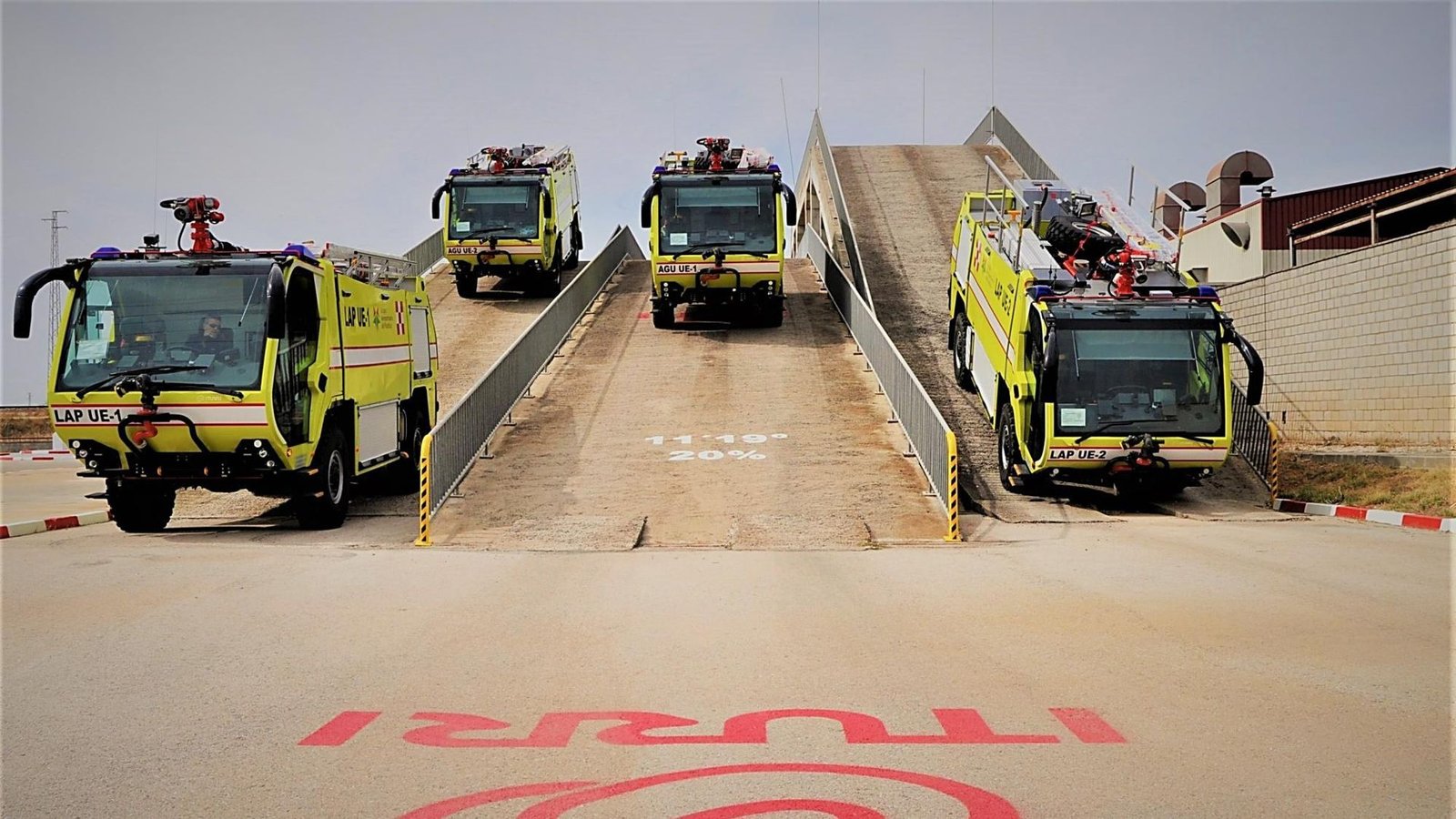
ITURRI’s plant in Seville includes a proving ground with ramps of up to 20% gradient, side-tilt platforms and off-road tracks, where every vehicle undergoes stability and performance testing before approval and delivery.
Compliance with these standards is not a luxury — it is a guarantee for lives and property, and it is a commitment behind every vehicle we supply.